News

US State Dept. Honors Demining Efforts

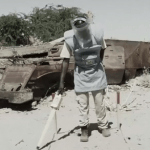
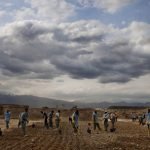
Schonstedt Instrument Company, in partnership with the United Nations Mine Action Service and the US Department of State, continues to deploy donated magnetic locators to underserved countries through the Schonstedt Humanitarian Demining Initiative. To date, more than 500 units have been shipped to demining teams in 28 countries. The Society of Religious Friends (Quakers) of Woodstown, NJ has been responsible for the donation of over 100 of those units, and was recently honored by the US Department of State, Bureau of Political- Military Affairs, Office of Weapons Removal and Abatement at a ceremony in Washington, DC. Frank Lenik and Jack…

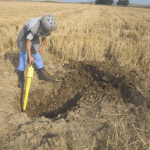
Schonstedt Magnetic Locator Searches for UXO unexploded ordnance in Azerbaijan

SHDI in Azerbaijan

The Schonstedt Humanitarian Demining Initiative (SHDI) continues to help save lives in countries that need it the most. Here’s a recent posting from the Azeri News Agency (APA). Baku – APA. Azerbaijan National Agency for Mine Action (ANAMA) on Wednesday released a report on the unexploded ordnances (UXO) discovered in the Terter district. According to the report, two UXOs, as well as the detonating fuse of a 122 mm artillery shell were seized as a result of the inspection conducted at five explosion sites in the Jamilli village of Terter. In general, from 7 April to 22 June, ANAMA inspected…

find locator tool

New Tool: Find the Right Locator

We developed a new Finding Tool that will help you home in on just the right locator for your needs. It just takes a few seconds!  

landmine

Surveyors Assist in Global Demining

Good article in the June 23 edition of Pangaea (the xyHt e-Newsletter) about the Schonstedt Humanitarian Demining Initiative and how surveyors are assisting in this global demining effort: UXOs and Mines Hurt, Surveyors Help The great thing about writing this newsletter is finding all the neat geospatial technology out there. Seeing this technology used for a truly good end is truly satisfying. (Don’t get me wrong, I don’t see any civilian geospatial technology be used for bad purposes, but this is an especially interesting effort; read on.) Click here to read full article

10 Units Shipped to Uganda and the Central African Republic

Now in its 8th year, the Schonstedt Humanitarian Demining Initiative (SHDI) is still going strong! Schonstedt just shipped 6 demining locators to Uganda, bringing the worldwide total to 483. The United Nations Mine Action Service (UNMAS) has assisted in getting the $1041 locators into the hands of UN-supported demining teams in 29 countries, among them Laos, Somalia, Kenya, Tajikistan, Vietnam, Nepal, Egypt, Mauritania, Ethiopia, Croatia, Chad, Azerbaijan, Gaza, Cambodia, Algeria, Lebanon, Libya, Uganda, the Darfur region of Sudan, and the Central African Republic.   This video tells the story of an innovative humanitarian demining partnership involving the United Nations Mine…

VIDEO: Schonstedt and UNMAS Demining Featured on FSNLive

Schonstedt Plays a Key Role in Underground Asset Management

As more emphasis is placed on locating, documenting and managing underground utility assets, a combination of survey magnets and Schonstedt magnetic locators are playing an important role in the identification and marking out of the utility infrastructure. Along with As-Builts, GPS and other data, information is integrated using sophisticated software designed to map and display underground utilities and site assets. Download one state-of-the-art example of how it all comes together: Sigma R2 Systems Brochure on this topic (PDF)

Find UXO underground locator

Schonstedt Locators in Afghanistan

Front page article in The Washington Post By Kevin Sieff KABUL — As the U.S. military withdraws from Afghanistan, it is leaving behind a deadly legacy: about 800 square miles of land littered with undetonated grenades, rockets and mortar shells. The military has vacated scores of firing ranges pocked with the explosives. Dozens of children have been killed or wounded as they have stumbled upon the ordnance at the sites, which are often poorly marked. Casualties are likely to increase sharply; the U.S. military has removed the munitions from only 3 percent of the territory covered by its sprawling ranges,…